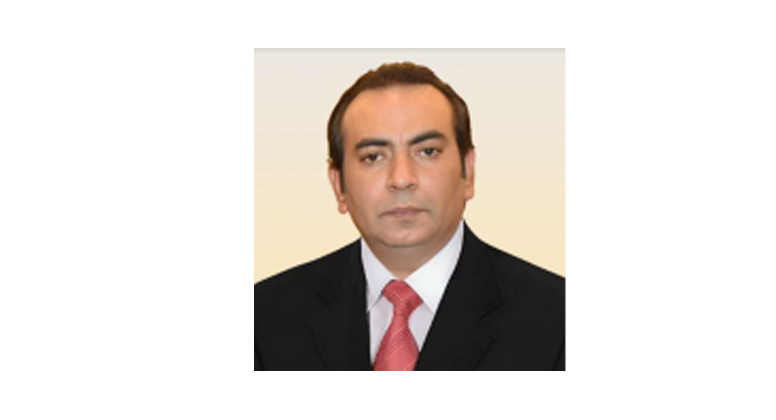
FPCCI Denounces Contractionary Monetary Policy Businesses & Industry Not Able to Secure Operating Capital Atif Ikram Sheikh, President FPCCI
Karachi: Mr. Atif Ikram Sheikh, President of the Federation of Pakistan Chambers of Commerce
and Industry (FPCCI), has expressed his disappointment over the State Bank of Pakistan's
decision to maintain the status quo on the key policy rate to keep it unchanged at 11.5% –
whereas, trade and industry in the dire need of some breathing space in the wake of current
stagnation-prone economic environs.
The apex trade body has termed the decision as highly contractionary and counterproductive –
warning that holding the benchmark interest rate at an oppressive level will continue to severely
stifle economic activity and undermine industrial revival efforts across the country. Monetary
policy was the only but a potent tool left with the authorities at the moment to provide some
facilitation; but, it remained unutilized, he added.
Mr. Atif Ikram Sheikh stated that the business community had demanded a reduction in the
policy rate to single-digits to help bring down the exorbitant cost of doing business. He
elaborated that the central bank's overly cautious approach directly contradicts current economic
realities – and, denies much needed support to trade & industry as trade deficit has climbed by
18.1% in July-August 2026 on year-on-year basis.
FPCCI Chief maintained that the industry is currently battling an existential crisis driven by
elevated energy tariffs, burgeoning petroleum prices, geoeconomic uncertainty, and sky-high
financing costs, directly resulting in stagnating industrialization across the country.
Mr. Atif Ikram Sheikh explained that the manufacturing sectors are suffering from severely
stunted growth because businesses cannot secure the capital required to operate. This stagnation
is severely compounded by extreme difficulty in access to finance, he added.
FPCCI President stressed that with the cost of borrowing remaining prohibitively high,
private-sector credit off-take will continue to plummet – crowding out small and medium
enterprises (SMEs) as well as large-scale manufacturers from the formal credit market and will
leave them desperate for operational liquidity.
Mr. Atif Ikram Sheikh warned that this sustained high cost of capital is the primary catalyst for
declining exports, as manufacturers are entirely unable to keep production costs competitive
globally.
Exporters are actively losing their hard-earned global market share to regional competitors who
benefit from highly accessible, single-digit interest rates. The exorbitant cost of export
refinancing in Pakistan makes local goods uncompetitive, resulting in loss of export orders and
declining foreign exchange earnings, he added.
Mr. Atif Ikram Sheikh highlighted that national targets for export growth and economic recovery
will remain elusive with prevailing monetary and fiscal policies. He urged the State Bank of
Pakistan to urgently reconsider its rigid stance and adopt immediate measures that genuinely
support business continuity
Brig Iftikhar Opel, SI (M), Retd.
Secretary General
Recent Posts
-

کاروبار اور صنعت کو آپریشنل سرمایہ حاصل کرنے میں شدید مشکالت کا سامنا ہے عاطف اکرام شیخ، صدر ایف پی سی سی آئی
... -
عاطف اکرام شیخ کا اسالمی اقتصادی انضمام اور مشترکہ منصوبوں کے فروغ پر زور
... -
Atif Ikram Sheikh Calls for Stronger Islamic Economic Integration and Joint Ventures
... -
آٹو پالیسی 2026 میں صنعتی ترقی اور برآمدات کے فروغ کے اقدامات کا خیرمقدم کرتے ہیں عاطف اکرام شیخ،صدر ایف پی سی سی آئی
... -
FPCCI Welcomes Industrial Growth and Export Promotion Measures in Auto Policy 2026 Atif Ikram Sheikh, President FPCCI
...