FPCCI Urges Government to Establish a Level-Playing Field for Commercial Importers Atif Ikram Sheikh, President FPCCI
Karachi: Mr. Atif Ikram Sheikh, President FPCCI, has apprised that the business community of
Pakistan atrongly appeals to government authorities to rectify discriminatory taxation policies
against commercial importers of industrial raw materials; and, also save billions of rupees for the
national exchequer. They demand that commercial importers of industrial raw materials and
industrial manufacturers be treated equally, he added.
Mr. Atif Ikram Sheikh explained that currently commercial importers are bearing the brunt of
disproportionate taxation; severely hindering their competitiveness and threatening the survival
of the Small and Medium Enterprises (SMEs) that rely on them.
Mr. Atif Ikram Sheikh elaborated that when you impose a 6 to 9 percent additional tax on
commercial importers while allowing industrial manufacturers to trade their imports at a mere 3
percent VAT, you are forcing legitimate businesses to close their doors. It is not an industry's job
to trade. This anomaly breeds flying invoices, encourages the misuse of industrial licenses, and
severely damages the national exchequer. Treating industrial raw materials equally across all
sectors is a definitive recipe for saving billions of rupees, he added.
Mr. Saquib Fayyaz Magoon, SVP FPCCI, highlighted several critical discrepancies in the current
and proposed tax regimes: (i) Discriminatory Taxation: Commercial importers face an excessive
additional taxation burden ranging from 6% to 9%, comprising additional Sales Tax and
Withholding Tax (WHT) (ii) Legitimizing Malpractices: The Finance Bill proposes allowing
industrial importers to trade their imports at a minimal 3% additional VAT. This heavily
discourages commercial importers and effectively legitimizes a practice outside the scope of
industrial manufacturing, as it is not the industry's job to engage in commercial trading (iii)
Encouraging the Undocumented Economy: The lack of competitiveness, compounded by fake
refunds and adjustments, is forcing commercial importers to shut down. This environment
actively encourages an undocumented economy, flying invoices, and misuse of industrial
licenses (iv) Impact on SMEs: Cottage industries and SMEs – the backbone of the economy –
rely exclusively on commercial importers for their raw materials. They must be able to procure
these materials at the same competitive rates available to large-scale industries.
Mr. Saquib Fayyaz Magoon maintained that this highly discriminatory policy creates a severe
lack of competitiveness in the market. Our cottage industries and SMEs rely entirely on
commercial importers to source their raw materials. If our commercial importers are taxed out of
business, our SMEs will be starved of competitively priced raw materials, jeopardizing countless
jobs and local manufacturing output. We strongly appeal to the authorities to ensure a
level-playing field immediately.
The FPCCI and the broader business community urge the government to revise the Finance Bill
to ensure that industrial raw materials are treated as raw materials across the board. Equal
taxation is the only viable path to a competitive, documented, and thriving economic landscape
in Pakistan.
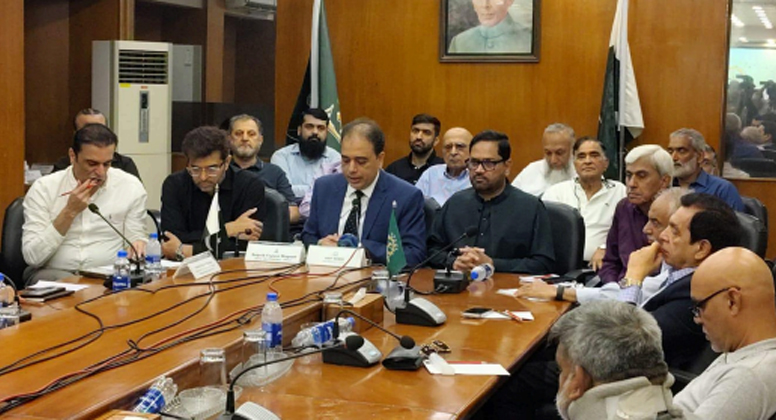
It is pertinent to note that the above issue was raised at a high-profile press conference at
Federation, Karachi – and, was also attended by the top leadership of The Pakistan Yarn
Merchants Association (PYMA); Pakistan Artificial Leather Importers & Merchants (PALIMA);
Pakistan Chemicals & Dyes Merchants Association (PCDMA); Pakistan Iron and Steel
Merchants Association (PISMA) and Pakistan Plastic Importers Association (PPIA).
Brig Iftikhar Opel, SI (M), Retd.
Secretary General
Recent Posts
-
کاروبار اور صنعت کو آپریشنل سرمایہ حاصل کرنے میں شدید مشکالت کا سامنا ہے عاطف اکرام شیخ، صدر ایف پی سی سی آئی
... -
FPCCI Denounces Contractionary Monetary Policy Businesses & Industry Not Able to Secure Operating Capital Atif Ikram Sheikh, President FPCCI
... -
عاطف اکرام شیخ کا اسالمی اقتصادی انضمام اور مشترکہ منصوبوں کے فروغ پر زور
... -
Atif Ikram Sheikh Calls for Stronger Islamic Economic Integration and Joint Ventures
... -

آٹو پالیسی 2026 میں صنعتی ترقی اور برآمدات کے فروغ کے اقدامات کا خیرمقدم کرتے ہیں عاطف اکرام شیخ،صدر ایف پی سی سی آئی
...