
FPCCI Rejects SBP’s Status Quo in Interest Rate Atif Ikram Sheikh, President FPCCI
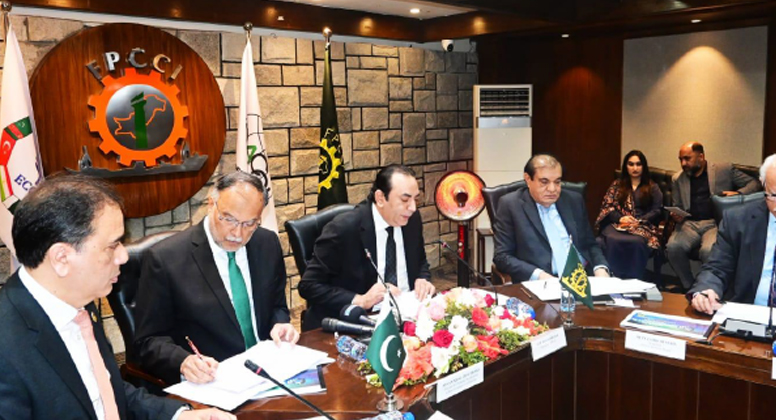
The Federation of Pakistan Chambers of Commerce and Industry (FPCCI), in collaboration with
Ipsos, today officially launched Pakistan’s first homegrown survey, the Index of Transparency
and Accountability in Pakistan (iTAP), during a launch ceremony held at the FPCCI Capital
House, Islamabad, at 11:00 AM.
The ceremony was graced by Federal Minister for Planning, Development and Special
Initiatives, Mr Ahsan Iqbal, as the Chief Guest. The event was also addressed by Mr Atif Ikram
Sheikh, President FPCCI, and Mr. Mian Zahid Hussain, SI, Chairman Policy Advisory Board
FPCCI and was attended by representatives from the public and private sectors, civil society,
academia, and the media.
The iTAP initiative was conceived in May 2025 as a strategic effort by FPCCI to develop an
indigenous, recurring benchmark for measuring transparency and accountability in Pakistan. The
survey aims to provide an objective assessment of public trust in government and institutions.
The field survey was conducted during Dec 25 and Jan 26, ensuring contemporary and nationally
representative insights.
Overall, findings establish a credible baseline for reform demonstrating that despite negative
perceptions, majority of citizen interactions with public institutions are reported to be
corruption-free. Strengthening transparency, addressing awareness gaps and effectively
communicating institutional improvements now emerge as the next critical frontier for advancing
governance, building public trust and improving Pakistan’s investment outlook.
Addressing the audience, Federal Minister congratulated FPCCI for bringing the critical issue of
transparency and accountability to forefront of national discourse with rigour and commitment.
He emphasized that transparency and accountability form the foundation of good governance and
are essential for citizen satisfaction, a business-enabling environment, investor confidence, and
sustainable national development.
The Minister highlighted the gap between public perceptions and actual lived experience. He
stressed that negative perceptions, if left unaddressed can undermine national progress and
distort realities. Bridging this perception–reality gap must therefore, be a shared priority.
The Chief Guest praised public institutions that have earned citizen trust through improved
service delivery and expressed confidence that if iTAP tracked consistently over time, it can
serve as a powerful monitoring and reform tool reinforcing the principle that “what gets
measured gets improved”.
Brig Iftikhar Opel, SI (M), Retd.
Secretary General
Recent Posts
-

ملک میں کاروبار کرنے کی لاگت خطے کے مقابلے میں 30 سے 35 فیصد زیادہ ہے عاطف اکرام شیخ صدر ایف پی سی سی آئی
... -
Cost of Doing Business in the Country is 30-35% Higher Than the Region Atif Ikram Sheikh, President FPCCI
... -

کاروبار اور صنعت کو آپریشنل سرمایہ حاصل کرنے میں شدید مشکالت کا سامنا ہے عاطف اکرام شیخ، صدر ایف پی سی سی آئی
... -
FPCCI Denounces Contractionary Monetary Policy Businesses & Industry Not Able to Secure Operating Capital Atif Ikram Sheikh, President FPCCI
... -
عاطف اکرام شیخ کا اسالمی اقتصادی انضمام اور مشترکہ منصوبوں کے فروغ پر زور
...